Renew Lehigh Valley Celebrated Farmland Preservation and Honored Farmland Preservation Heroes at Sustain-a-Ball
RenewLV celebrated Lehigh Valley Initiatives to protect and preserve the region’s farmland at a gala fundraiser on Saturday, June 17th at the Allentown Brew Works to support RenewLV’s 2017 Farmland Preservation Campaign. The event brought together farmers, elected officials and Lehigh Valley residents who care about farmland preservation and growing the local food economy to honor the Valley’s farmland preservation heroes, programs and initiatives. Those receiving awards included Lehigh County Commissioner Percy Dougherty who received a lifetime achievement award for his ongoing efforts to preserve farmland. The Farmland Preservation Programs of Northampton and Lehigh Counties were honored for the thousands of acres of farmland they have saved into perpetuity, which ensures the preservation of ‘ farmland forever.’ Upper Milford Township and Moore Township were honored for their efforts in raising farmland preservation funds at the local municipal level. The Seed Farm was honored for its farmer training program that “grows new farmers.”
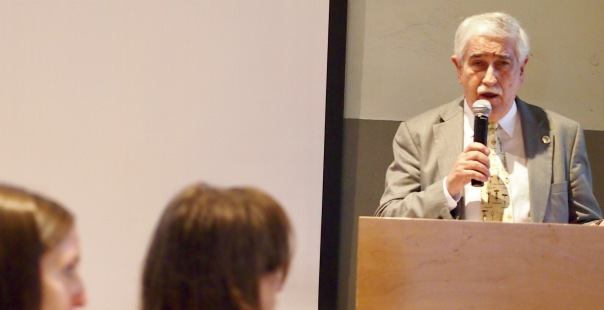
Percy Dougherty, honored at the RenewLV Sustain-a-Ball for his work in farmland preservation, listed the compelling reasons for preserving farmland including food production and environmental benefits, citing the exceptional fertility of the soils in the Lehigh Valley

RenewLV board member, Drabenstott welcomed the attendees of RenewLV’s Sustain-a-Ball and thanked the sponsors for their support
Sponsors for the event included the title sponsor, Embassy Bank of the Lehigh Valley, joined by Samuel Adams, The Amaranth Foundation, St. Luke’s University Health Network, Morris Black Designs, Sustainable Energy Fund, Jenny’s Kuali, Canns-Bilco, Wesley Works Real-estate, Lehigh Valley Health Network, David Hornung Architect Planners, Morgan Stanley and Rural Preservation Association of Northwestern Lehigh County.
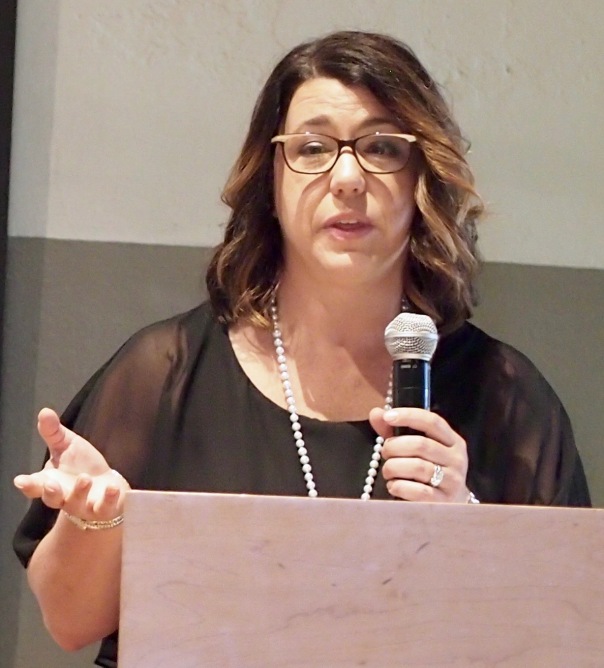
Diane Cunningham, representing title sponsor Embassy Bank, expressed gratitude for the work of RenewLV and the Sustain-a-Ball
People honored at the Sustain-a-Ball received recognition and praise for their work in farmland preservation and for their assistance in RenewLV’s successful 2016 Farmland Preservation Campaign. RenewLV advocated in 2016 for funding Lehigh and Northampton County farmland preservation offices at a level that totaled $2.5 million in the 2017 county budgets, $2 million for Lehigh County and $500,000 for Northampton County.
Julie Thomases, RenewLV Board member and Chair of RenewLV’s Farmland Preservation Committee, together with Joyce Marin, RenewLV’s Executive Director, highlighted RenewLV’s successful 2016 Farmland Preservation efforts and the partnerships that made them possible in restoring the Lehigh and Northampton County funding for farmland preservation.
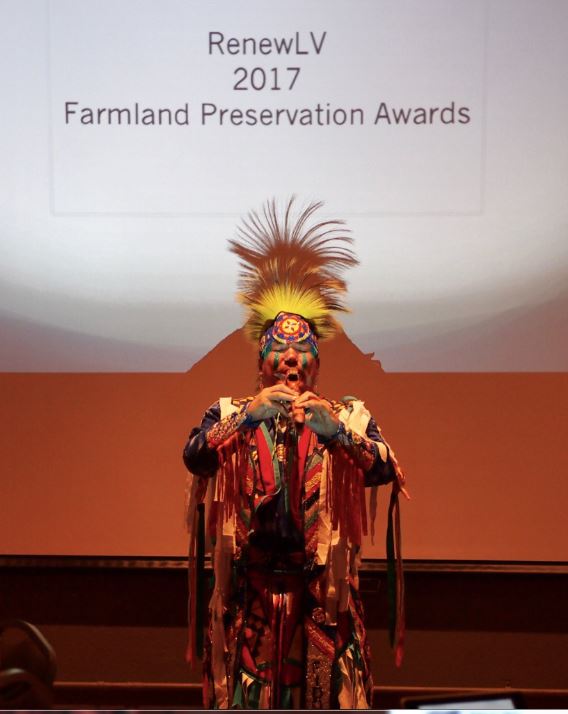
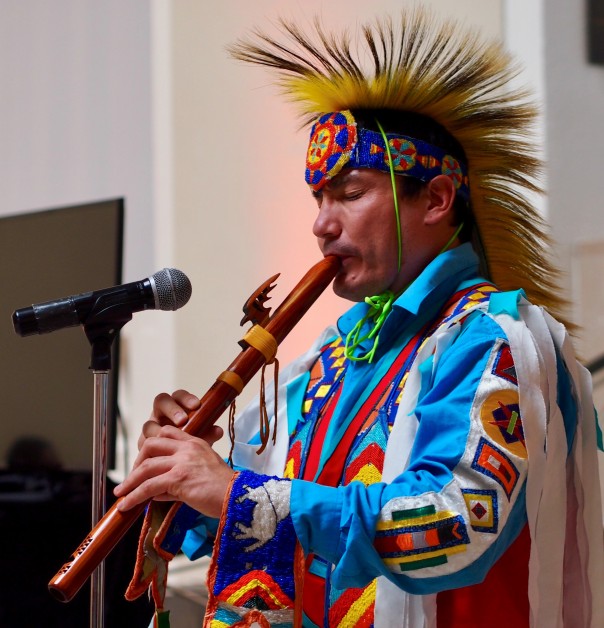
Delwin Fiddler, Jr., a world renowned Lakota performing artist plays the Native American flute at the RenewLV Sustain-a-Ball
Attendees enjoyed the dance and flute playing of world-renowned Native American performing artist, Delwin Fiddler, Jr. Mr. Fiddler gave the attendees of the Sustain-a-Ball a special Native American blessing in both English and Lakota that expressed gratitude to all the people in the Lehigh Valley who work to preserve clean air and water, and healthy soils. He culminated his part of the program with the presentation of a special honor “lightning stick” to Julie Thomases, for her leadership as chair of RenewLV’s Farmland Preservation Committee.
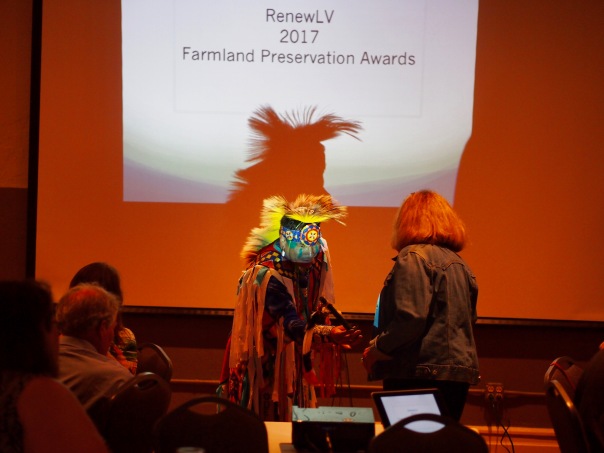
Delwin Fiddler, Jr. honored RenewLV board member and chair of the Farmland Preservation Committee with a “lightening stick” for her work on preserving farmland in the Lehigh Valley in 2016 and 2017
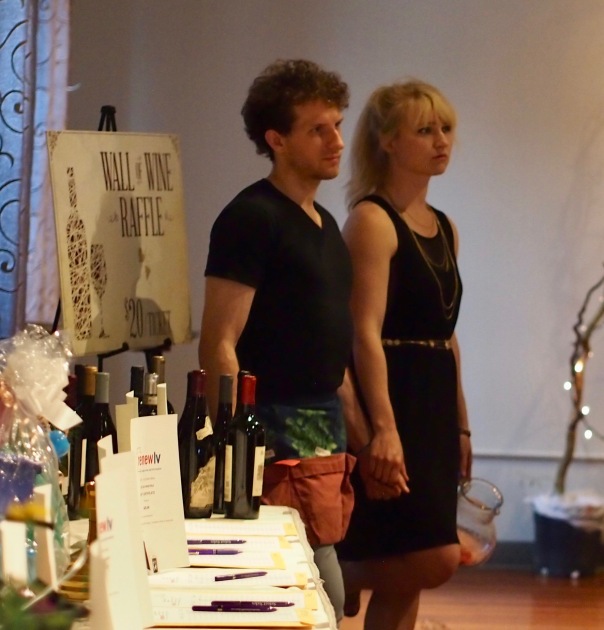
A Silent Auction and Wall of Wine raffle was conducted by Sheila and Jeff Youst with help from Sarabeth Brockley

Dr. Barnaby Ruhe Ph.D, a professor of art at NYU and an Emmaus resident, painted portraits of attendees such as Marissa Altman during a Marathon Portrait painting session
Guests at the Sustain-a-Ball included Dan Poresky, Percy and AnneDougherty, Donna Wright, Alan Jennings, State Rep. Bob Freeman, Lehigh County Executive candidate Phillips Armstrong and his wife Annette, Dr. Cory Kirshner, Deana Zosky, Phyllis Alexander, Mark and Theresa Aurand, Pam Ruch and Martin Boksenbaum, Tom Dinkelacker and Carol Janzon, Scott and Allison Fritchman and Tom and Shelia Gallagher.
Seed Farm Executive Director, Lindsey Parks, attended with her father Bob Carrington. Lou Cinquino attended with his daughter Lucia. Local farmers and food writers George Devault, Upper Milford Township supervisor and his wife Melanie Devault, attended with their son, Don Devault.

Guests, including Deana Zosky of Lower Macungie Township, Rep. Bob Freeman of Easton, Alan Jennings, Dr. Corey Kirshner, Brian and Lisa Miller of Upper Milford Township and Lynn Rothman of Bethlehem, enjoy cocktail reception at the RenewLV Sustain-a-Ball
Also in attendance were Reid Boyer and Donna Haas, Steve and Nichole Shelly, John and Kathy Glagola, Mr. and Mrs. Jeff Zehr, Brian and Lisa Miller, John Nierer and Heather Kenderdine, Dr. Michael Rothman and his wife Lynn. Renew Lehigh Valley Board members in attendance included, Alan Jennings, Michael Drabenstott, David Hornung, Bob Freeman, Delicia Nahman, and Jo Ann Pendleton, joined by RenewLV Executive Director Joyce Marin.
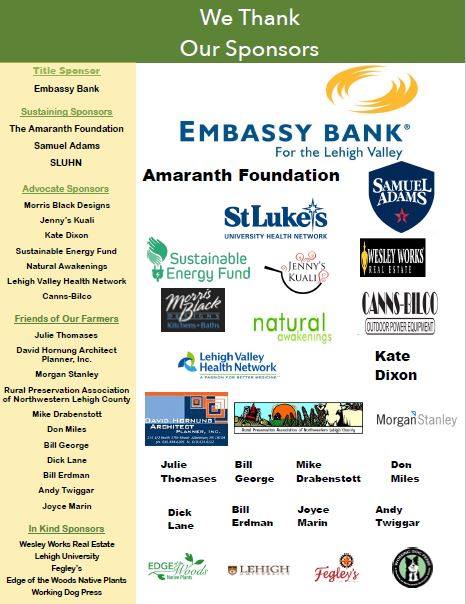
Join our title sponsor, Embassy Bank and others including Samuel Adams, The Amaranth Foundation, St. Luke’s University Health Network, Jenny’s Kuali, The Sustainable Energy Fund, Canns Bilco, Lehigh Valley Health Network, Wesley Works, Kate Dixon, Morris Black & Sons, Working Dog Press, The Rural Preservation Association for Northwestern Lehigh County, David Horung Architect Planner, Inc., Morgan Stanley, The Fegley’s Allentown Brew Works, Don Miles, Mike Drabenstott, Bill Erdman, Bill George, Dick Lane, Julie Thomases, Lehigh University, Natural Awakenings, Edge of the Woods Native Plants,
Wesley Works provided a photo booth at the Sustain-a-Ball. If you would like to view or purchase photos taken there, go to this link: https://wesleyworks.smugmug.com/Photo-Booths/2017/Renew-LV/
If you have questions, email smartgrowth@renewlv.org
Thank You To Our Sponsors
Delwin Fiddler, Jr. plays the Native American flute at the RenewLV Sustain-a-Ball
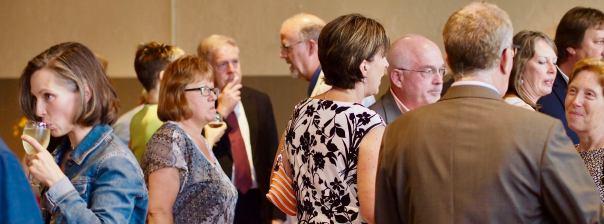
The cocktail hour at the @RenewLV Sustain-a-Ball with Lindsey Parks, Deana Zosky, Rep. Bob Freeman, Alan Jennings, Tom Dinkelacher, Dr. Cory Kushner and Lynn Rothman
Thank you, all so very much for the commitment of our RenewLV @Sustain-a-Ball sponsors to work of growing the local food economy and preserving farmland. It is the passion and dedication of supporters like you that have helped preserve our local farms in perpetuity (which means “Farmland Forever”) and what they provide to our community, whether that is local food, clean water and air or beautiful open vistas. Your investment in this event makes a real difference in the region. We would like to thank you for your generous support of the @Sustain-a-Ball. Without your help and support RenewLV would not have been able to keep the drum beat going that resulted in mobilizing a combined $2.5 million toward farmland preservation easements in Lehigh and Northampton County budgets this year. We are deeply grateful for your sponsorship.
#embassybank #amaranthfoundation #samueladams #sluhn#sustainableenergyfund #jennyskuali #wesleyworksrealestate#morrisblackdesigns #naturalawakenings #cannsbilco #lvhn #katedixon#davidhornungarchitect #rpanlc #morganstanley #juliethomases#billgeorge #michaeldrabenstott #donmiles #dicklane #billerdman#joycemarin #andytwiggar #edgeofthewoodsnativeplants#lehighuniversity #fegleysallentownbrewworks #workingdogpress

Deana Zosky and Alan Jennings at the RenewLV Sustain-a-Ball

Donna Wright enjoys a conversation with friends at the RenewLV Sustain-a-Ball
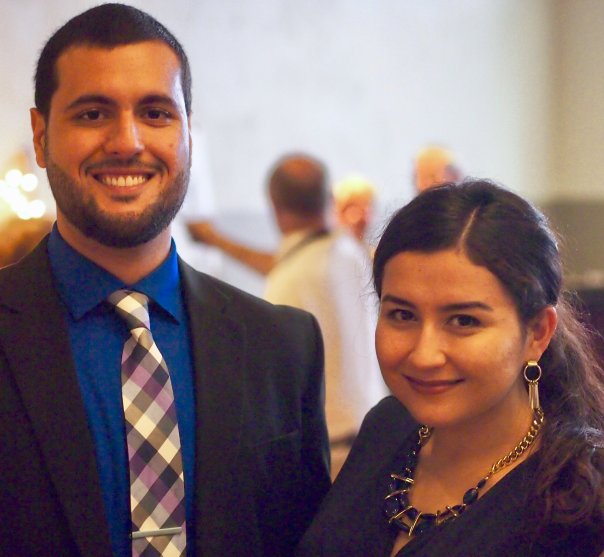
A handsome couple and helpful volunteer at the RenewLV Sustain-a-Ball
Michael Drabenstott welcomes attendees to and thanks sponsors of the RenewLV Sustain-a-Ball

RenewLV board members (and one former co-chair) enjoy a laugh at the Sustain-a-Ball
Reason #4 to Attend the Sustain-a-Ball: Marathon Portrait Painting
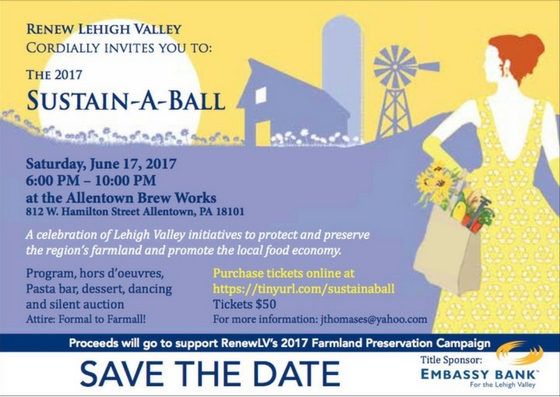
We know that you support farmland preservation, which is the reason for this event.
However, you also like a good time, and Saturday night will be one heck of a good time!
Besides the awesome jazz ensemble,
Besides the performance and blessing by world renowned Native American performing artist, Delwin Fiddler, Jr.,
Besides the great, locally sourced food and local, award winning Allentown Brew Works beers,
Besides the fabulous sense of community we’ll have putting so many farmland preservation supporters under one roof,
Besides the opportunity you have to get some interesting and unique items at the silent auction,
Besides the opportunity to win 24 bottles of wine with the Wall of Wine raffle,
Besides the honoring of our region’s truly remarkable farmland preservation heroes,
At the 2017 Sustain-a-Ball, you will have an opportunity to have your portrait painted during a four hour Marathon Portrait Session by Emmaus/New York artist and local madman (we say this affectionately) Dr. Barnaby Ruhe, PhD.
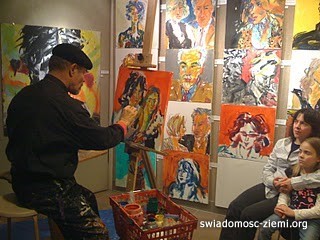
If you do not have a portrait of yourself painted by Barnaby, here’s your chance to get one. Barnaby will have his easle set up to create impressive 4 foot portraits of you (ink on paper, colored with acrylic paint.) Donations for the portraits will benefit RenewLV’s farmland preservation campaign.
If you can join us on Saturday, we would love to have you in the room. We can still squeeze you in. You can purchase the tickets for $50 per person online at: https://tinyurl.com/sustainaball
If you cannot join us but care about farmland preservation and would like to make a donation to our campaign, please go to: www.renewlv.org/donate/ and make a donation in any amount. Or, send a check made out to “RenewLV” to 1337 East Fifth Street, Bethlehem, PA 18015
You are sure to have a really good time on Saturday night, honoring our farmland preservation heroes, enjoying food and music, having your portrait painted, receiving a Native American blessing and joining together in community for a cause that is near and dear to so many hearts.

Join our title sponsor, Embassy Bank and others including Samuel Adams, The Amaranth Foundation, Jenny’s Kuali, The Sustainable Energy Fund, Canns Bilco, Lehigh Valley Health Network, Wesley Works, Kate Dixon, Morris Black & Sons, Working Dog Press, The Rural Preservation Association for Northwestern Lehigh County, David Horung Architect Planner, Inc., Morgan Stanley, The Fegley’s Allentown Brew Works, Don Miles, Mike Drabenstott, Bill Erdman, Bill George, Dick Lane, Julie Thomases, Lehigh University, Natural Awakenings, Edge of the Woods Native Plants,
Sustain-a-Ball
Saturday, June 17 from 6 – 10 PM
Allentown Brew Works, 812 W. Hamilton Street
Program, hors d’oeuvres
Ceremony by Lakota Leader
Pasta bar, dessert, music, dancing
Silent Auction
Attire: Formal to Farm-All!
Dress is Formal to Farm-all! From bow ties and pearls to overalls and pitchforks.
If you have questions, call 917-288-3936 or email smartgrowth@renewlv.org
Area farmers markets and sustainability-minded business will have an opportunity to share information at our information tables.
Reason #5 to Attend the Sustain-a-Ball: Farmland Preservation
We’re going to say it straight out: farmland preservation. The Sustain-a-Ball will help RenewLV to continue to advocate for farmland preservation.
Last year with the help of a host of amazing people, under the leadership of Julie Thomases, RenewLV board member and chair of the Farmland Preservation Committee, we pushed for the budgets to be restored for the farmland preservation offices of Lehigh and Northampton Counties.
We asked for $2 million for Lehigh County’s budget and $1 million for Northampton County. Lehigh County heard us. The 2017 budget for their farmland preservation program IS $2 million! Northampton County restored $500,000 to their easement program. These dollars go to putting easements on farmland in our region so that the farm fields you see today will stay in agricultural production “in perpetuity.” That means: “Farmland Forever.”
We are so grateful for the work done to date, but the job is not over.
Now what? In order for our region to even consider approaching the goal of preserving 25% of the land of our region for agriculture (the goal stated in our region’s comprehensive plan,) we have to keep the funding levels for the county programs up for ten years.
PLUS, we need local municipalities to raise money locally for farmland preservation as some townships like Moore Township in Northampton County and Upper Milford in Lehigh County have done.
AND, we need the state to not slash their matching programs.
We would like to keep the drum beat going for farmland preservation at all levels of government, but “until we don’t need money, we will need money.” The Sustain-a-Ball is a fundraiser for RenewLV. We want to continue to advocate for farmland preservation. We want to continue to make noise for this urgent issue, but we need your help.
If you can join us on Saturday, we would love to have you in the room. We can still squeeze you in. You can purchase the tickets for $50 per person online at: https://tinyurl.com/sustainaball
If you cannot join us but care about farmland preservation and would like to make a donation to our campaign, please go to: www.renewlv.org/donate/ and make a donation in any amount. Or, send a check made out to “RenewLV” to 1337 East Fifth Street, Bethlehem, PA 18015
The investment you make in joining us for the Sustain-a-Ball is tiny compared to the benefits that farmland preservation will give the region.
Plus, we think that you will have a really good time on Saturday night, honoring our farmland preservation heroes, enjoying food and music, receiving a Native American blessing and joining together in community for a cause that is near and dear to so many hearts.
Join our title sponsor, Embassy Bank and others including Samuel Adams, The Amaranth Foundation, Jenny’s Kuali, The Sustainable Energy Fund, Canns Bilco, Lehigh Valley Health Network, Wesley Works, Kate Dixon, Morris Black & Sons, Working Dog Press, The Rural Preservation Association for Northwestern Lehigh County, David Horung Architect Planner, Inc., Morgan Stanley, The Fegley’s Allentown Brew Works, Don Miles, Mike Drabenstott, Bill Erdman, Bill George, Dick Lane, Julie Thomases, Lehigh University, Natural Awakenings
Sustain-a-Ball
Saturday, June 17 from 6 – 10 PM
Allentown Brew Works, 812 W. Hamilton Street
Program, hors d’oeuvres
Ceremony by Lakota Leader
Pasta bar, dessert, music, dancing
Silent Auction
Attire: Formal to Farm-All!
Dress is Formal to Farm-all! From bow ties and pearls to overalls and pitchforks.
If you have questions, call 917-288-3936 or email smartgrowth@renewlv.org
Area farmers markets and sustainability-minded business will have an opportunity to share information at our information tables.
Reason #6 to Attend the Sustain-a-Ball: No Farms — No Beer
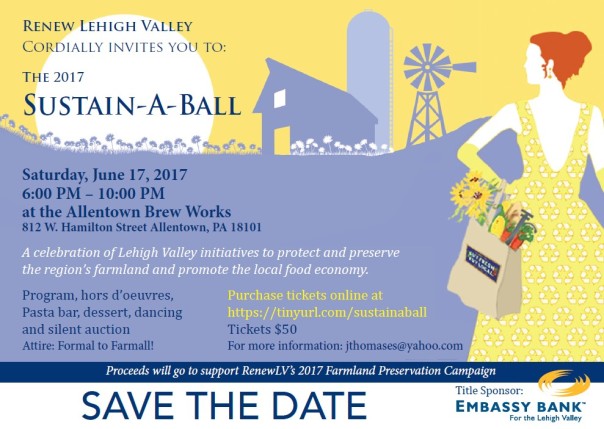
Why should you join the fun at the RenewLV’s 2017 Sustain-a-Ball on Saturday, June 17?
You like beer.
Farms and the production of hops, barley and wheat make beer. If you enjoy beer, plan on attending the Sustain-a-Ball to honor the local farmland preservation heroes and connect with local farmers and land stewards who are preserving our farmland in the Lehigh Valley.
If you really like beer, you’ll be happy to know that this event is being held at the Allentown Brew Works. There you, can sample the The Allentown Brew Works varied local brew.
Buy your tickets ($50 each) TODAY at https://tinyurl.com/sustainaball
(We have to give a headcount to the Brew Works on Saturday, so please buy your ticket now!)

Join our title sponsor, Embassy Bank and others including Samuel Adams-Brewing the American Dream,The Amaranth Foundation, Jenny’s Kuali, The Lehigh Valley Health Network, The Sustainable Energy Fund, Canns-Bilco Outdoor Power Equipment, Wesley Works, Morris Black & Sons, Working Dog Press, David Horung Architect Planner, Inc., Morgan Stanley, The Fegley’s Allentown Brew Works, Don Miles, Mike Drabenstott, Bill Erdman, Bill George, Dick Lane, Julie Thomases, Lehigh University, Natural Awakenings
Good friends, good food, good times, good cause. We hope to see you there!
Entertainment will include dancing to easy listening jazz standards performed by “The Austin Kruczek Group,” an ensemble that includes guitar, trombone, piano and bass.
Sustain-a-Ball
Saturday, June 17 from 6 – 10 PM
Allentown Brew Works, 812 W. Hamilton Street
Program, hors d’oeuvres
Ceremony by Lakota Leader
Pasta bar, dessert, music, dancing
Silent Auction
Attire: Formal to Farm-All!
The RenewLV 2017 Sustain-a-Ball will be a celebration of Lehigh Valley efforts to protect and preserve the region’s farmland, helping to fund RenewLV’s 2017 Farmland Preservation advocacy.
If you have questions, want to be a sponsor or contribute something to the silent auction, or need additional information, call 917-288-3936 or email smartgrowth@renewlv.org
Reason #7 to Attend the Sustain-a-Ball: Kick up your creativity with what you wear, from formal to “farmall!”
Why should you join us at the RenewLV’s 2017 Sustain-a-Ball on June 17?
Attire at the Sustain-a-Ball will be “anything goes” from overalls to tuxedos, or any combination in between. What will YOU wear? We can’t wait to see!
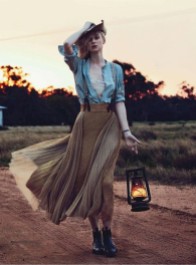

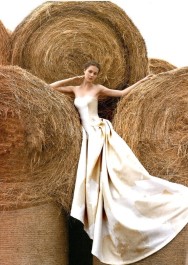
Wesley Works in Emmaus will be providing complementary photography services for the event! So, WHATEVER you wear, you’ll be going home with a momento photograph to remember this fun and most magical evening.
Buy your tickets ($50 each) TODAY at https://tinyurl.com/sustainaball

(We have to give a headcount to the Brew Works on Saturday, so please buy your ticket now!)
A big thank you to Sheila Youst who has helped us to organize the ever-popular “Wall of Wine” (in which you go home with 26 bottles of wine donated by our fabulous RenewLV board of directors.) Sheila has also organized a fabulous silent auction with items such as:
- Apple Jack and distillery tour and tasting from Eight Oaks Craft Distillers in New Tripoli
- A signed, numbered, framed portrait of the Native American dancer/flute-player performing at the event, Delwin Fiddler, Jr. by Lehigh Valley photopher, Lynnette Van Balen at White Lightening Images.
- Book, “The Price of Gold, The Toll and Triumph of One Man’s Olympic Dream,” signed by author, Olympic Gold Medalist and executive director, of Valley Preferred Cycling Center, Marty Nothstein (value: $200)
- Gift certificates to Dan’s Camera City for photo product, photo gift or DPU class (value: $250)
- Beautiful gift baskets from:
- La Belle Cuisine, the gourmet cooking store in Emmaus
- Carmel Kitchen in Allentown, filled with signature wine, food and gift items
- High end golf putter from Sittler Golf in Kutztown
- Gift cards from
- 187 Rue Principale in Emmaus
- Youell’s Oyster House in Allentown
- The Limeport Inn
- Switch Back Pizza
Join our title sponsor, Embassy Bank and others including Samuel Adams-Brewing the American Dream,The Amaranth Foundation, Jenny’s Kuali, The Lehigh Valley Health Network, The Sustainable Energy Fund, Canns-Bilco Outdoor Power Equipment, Wesley Works, Morris Black & Sons, Working Dog Press, David Horung Architect Planner, Inc., Morgan Stanley, The Fegley’s Allentown Brew Works, Don Miles, Mike Drabenstott, Bill Erdman, Bill George, Dick Lane, Julie Thomases, Lehigh University, Natural Awakenings
Good friends, good food, good times, good cause. We hope to see you there!
Entertainment will include dancing to easy listening jazz standards performed by “The Austin Kruczek Group,” an ensemble that includes guitar, trombone, piano and bass.
Sustain-a-Ball
Saturday, June 17 from 6 – 10 PM
Allentown Brew Works, 812 W. Hamilton Street
Program, hors d’oeuvres
Ceremony by Lakota Leader
Pasta bar, dessert, music, dancing
Silent Auction
Attire: Formal to Farm-All!
The RenewLV 2017 Sustain-a-Ball will be a celebration of Lehigh Valley efforts to protect and preserve the region’s farmland, helping to fund RenewLV’s 2017 Farmland Preservation advocacy.
If you have questions, want to be a sponsor or contribute something to the silent auction, or need additional information, call 917-288-3936 or email smartgrowth@renewlv.org
Reason # 8 to Attend the Sustain-a-Ball: A Magical Night to Remember
Why should you join us at the RenewLV’s 2017 Sustain-a-Ball on June 17?
Reason # 8 to Attend the Sustain-a-Ball: A Magical Night to Remember
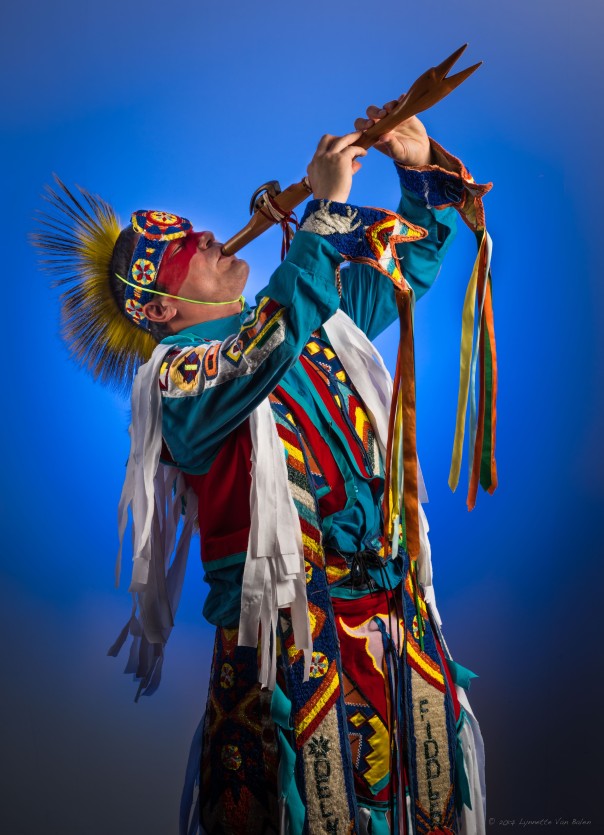
Join us for a magical evening and once-in-a-lifetime performance of Native American music, dance, drumming and blessings.
Have you heard the buzz? People are already talking about the “must see” entertainment scheduled for the Sustain-a-Ball.
Delwin Fiddler, Jr., world renowned Native American Lakota performing artist and ceremonial leader, will take us on a magical journey to connect us to Mother Earth, each other and ancient wisdom of his people. Delwin is a descendant of Sitting Bull, Crazy Horse and Elk Head, the grandson of Marie Elk Head, and in the lineage of the Keepers of the White Buffalo Calf Pipe. He is joining us after the experience of spending the last half of 2016 performing sacred ceremonies at Sacred Stone Camp in Standing Rock, ND.
In the fast moving 20 minute performance during the Sustain-a-Ball you will:
- Feel the “heart beat of Mother Earth,” through Native American hand drumming and Mr. Fiddler’s performance of an honor song especially created to bless all who work in the Lehigh Valley to sustain and protect Mother Earth, the land, the water and our food;
- Connect to each other and “all my relations”(plants, insects, animals, birds, and planets) in the Circle of Life through performance of the Lakota hoop dance, a deeply spiritual and interactive ceremonial dance;
- Experience the “Great Spirit” through the ethereal music of the Native American flute
- Connect to ancient healing energy through a brief ceremony with a sacred, spherical medicine stone passed on to Mr. Fiddler, specifically for blessing the people and the earth.
Buy your ticket ($50 each) NOW at https://tinyurl.com/sustainaball to reserve your spot.
A big thank you to Sheila Youst who has helped us to organize a fabulous silent auction with items such as:
- Apple Jack and distillery tour and tasting from Eight Oaks Craft Distillers in New Tripoli
- Book, “The Price of Gold, The Toll and Triumph of One Man’s Olympic Dream,” signed by author, Olympic Gold Medalist and executive director, of Valley Preferred Cycling Center Marty Nothstein (value: $200)
- Gift certificates to Dan’s Camera City for photo product, photo gift or DPU class (value: $250)
- Beautiful gift baskets from:
- La Belle Cuisine, the gourmet cooking store in Emmaus
- Carmel Kitchen in Allentown, filled with signature wine, food and gift items
- High end golf putter from Sittler Golf in Kutztown
- Gift cards from
- 187 Rue Principale in Emmaus
- Youell’s Oyster House in Allentown
- The Limeport Inn
- Switch Back Pizza
Good friends, good food, good times…
Good friends, good food, good times. Entertainment will include dancing to easy listening jazz standards performed by “The Austin Kruczek Group,” an ensemble that includes guitar, trombone, piano and bass.
Join our title sponsor, Embassy Bank and others including Samuel Adams, The Amaranth Foundation, Jenny’s Kuali, The Sustainable Energy Fund, Canns Bilco, Wesley Works, Morris Black & Sons, Working Dog Press, David Horung Architect Planner, Inc., Morgan Stanley, The Fegley’s Allentown Brew Works, Don Miles, Mike Drabenstott, Bill Erdman, Bill George, Dick Lane, Julie Thomases, Lehigh University, Natural Awakenings
P.S. A table will be available for Farmers markets and vendors to promote their markets and products.
Sustain-a-Ball
Saturday, June 17 from 6 – 10 PM
Allentown Brew Works, 812 W. Hamilton Street
Program, hors d’oeuvres
Ceremony by Lakota Leader
Pasta bar, dessert, music, dancing
Silent Auction
Attire: Formal to Farm-All!
The Sustain-a-Ball will be a celebration of Lehigh Valley efforts to protect and preserve the region’s farmland.
This fundraiser will help fund RenewLV’s 2017 Farmland Preservation Campaign.
Dress is Formal to Farm-all! From bow ties and pearls to overalls and pitchforks.
Area farmers markets and sustainability-minded business will have an opportunity to share information at our information tables.
If you have questions, want to be a sponsor or contribute something to the silent auction, or need additional information, call 917-288-3936 or email smartgrowth@renewlv.org
Reason #9 to have a ball at the Sustain-A-Ball: DETER WAREHOUSES & TRUCK TRAFFIC
Why should you join us at the RenewLV’s 2017 Sustain-a-Ball on June 17?
Reason # 9: DETER WAREHOUSES AND TRUCK TRAFFIC THROUGH SUPPORTING FARMLAND PRESERVATION
Farmland preservation is a viable strategy to deter future increases in truck traffic and protect the Lehigh Valley’s air quality and quality of life
Unless you’ve been living under a rock, you know that we have a serious warehouse problem in the Lehigh Valley. As warehouses have proliferated throughout the region, they have brought polluting and unsafe increases in truck traffic.
Not only do the big trucks clog traffic and bear down on you when you are driving on Routes 22 and 78, but increasingly they are damaging secondary roads not designed to support heavy loads carried by huge trucks. Truck traffic is dangerous! We see mangled autos and overturned tractor trailers and think, “that could be me or someone I love.”
- Warehouses and the development of farmland are compromising our air quality through truck traffic and traffic congestion. According to the American Lung Association, the Lehigh Valley has the 14th worst air quality in the nation. They consistently give us an “F” rating for our air quality.
If you, like us, can’t imagine our region with TWICE the number of trucks we have today, join us today by advocating for funding farmland preservation. Robust farmland preservation programs can protect us against future warehouse development and increases in truck traffic.
We can make Farmland Preservation the ethos of our region. The need is urgent. We need you to do two things:
- Tell all candidates for public office you meet at the polls tomorrow, Tuesday May 16th, “Fund Farmland Preservation.”
- Buy your tickets today the Sustain-a-Ball on June 17th.
Sustain-a-Ball
Saturday, June 17 from 6 – 10 PM
Allentown Brew Works, 812 W. Hamilton Street
Program, hors d’oeuvres
Ceremony by Lakota Leader
Pasta bar, dessert, music, dancing
Silent Auction
Attire: Formal to Farm-All!
The Sustain-a-Ball will be a celebration of Lehigh Valley efforts to protect and preserve the region’s farmland.
An evening of fun, food, music and friendship that will help fund RenewLV’s Farmland Preservation Campaign.
Join our title sponsor, Embassy Bank and others including The Amaranth Foundation, Jenny’s Kuali, The Sustainable Energy Fund, Morgan Stanley, Morris Black & Sons, Working Dog Press, The Fegley’s Allentown Brew Works, Mike Drabenstott, Bill Erdman, Bill George, Dick Lane, Julie Thomases, Don Miles, Mike Drabenstott.
See old friends and — make new ones. Connect with people who care about farmland preservation, food sustainability and the environment. Help celebrate our region’s farmland preservation heroes.
Dress is Formal to Farm-all! From bow ties and pearls to overalls and pitchforks.
Buy your ticket ($50 each) NOW at https://tinyurl.com/sustainaball to reserve your spot.
If you have a business or organization that would like to sponsor the Sustain-a-Ball, let us know as soon as possible. Additionally, you can promote your organization or business through a basket or item for the silent auction. Let us know. Do you have a business with a sustainability theme or ethos? Bring your business cards and brochures — there will be a table to display your information!
If you have questions or need additional information, call 917-288-3936 or email smartgrowth@renewlv.org
Reason #10 to have a ball at the Sustain-A-Ball: FRESH, LOCAL FOOD
Why should you join us at the Sustain-a-Ball on June 17?
Reason # 10: FRESH, LOCAL, FOOD:
Farmland and the fresh food it produces are vital to your health and the Lehigh Valley’s future
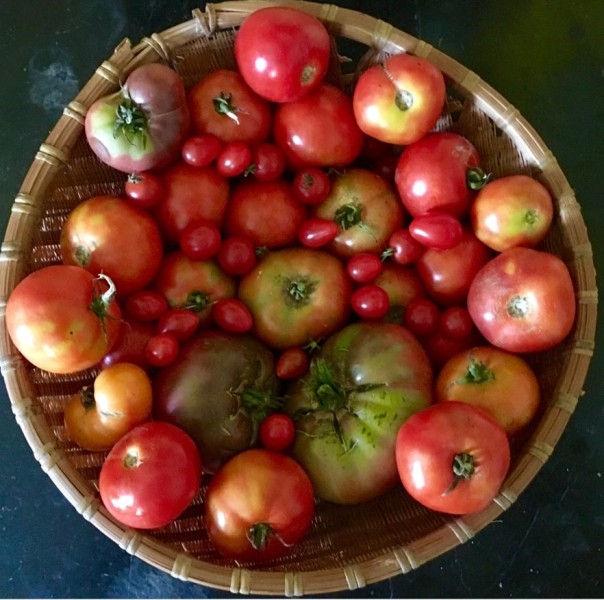
- As of 2013, according to Assessment report, LV Food Economy: the biggest challenge to our local food economy is the loss of farmland
- As of 2013, we could only feed 24% of the people in the Lehigh Valley, or 150,000 with our remaining farmland….. Allentown, alone, has a population of 160,000
- Much of our food comes from CA. With their alternating droughts and flooding, we need to take steps to increase our own food security by sourcing more of our food close to home.
- Locally grown produce is fresher, tastes better and has more nutritional value than food shipped from a distance.
If you, like us, can’t imagine our region with farmland and the sweet corn, tomatoes and peaches it produces, join us!
RenewLV’s
Sustain-a-Ball
Saturday, June 17 from 6 – 10
Allentown Brew Works, 812 W. Hamilton Street
This event will be a celebration of Lehigh Valley initiatives to protect and preserve the region’s farmland and promote the local food economy.
We have an exciting, magical night planned for you that will include some certainly delightful and possibly profound surprises with performances by an internationally renowned Lakota hoop dancer!
This evening of fun, food, music and friendship is being held to benefit RenewLV’s 2017 Farmland Preservation Campaign
Join our title sponsor, Embassy Bank and the RenewLV board of directors. See old friends and make new ones. Connect with people who care about farmland preservation, food sustainability and the environment. Celebrate our farmland preservation heroes and initiatives that have helped protect and preserve the region’s farmland and promote the local food economy. Some of our region’s Farmland Preservation Heroes will be honored.
The evening’s locally sourced menu will feature seasonal delights and Fegley’s own brew. A silent auction will offer locally made jewelry, art, bird boxes, yoga lessons, baskets of gardening items and more.
Dress is Formal to Farm-all! From bow ties and pearls to overalls and pitchforks.
Buy your ticket ($50 each) today at http://tinyurl.com//sustainaball to reserve your spot.
All funds will go to RenewLV’s 2017 Farmland Preservation Program.
If you have a business or organization that would like to sponsor the Sustain-a-Ball, let us know as soon as possible. Additionally, you can promote your organization or business through a basket or item for the silent auction. Let us know. Do you have a business with a sustainability theme or ethos? Bring your business cards and brochures — there will be a table to display your information!
If you have questions or need additional information, call 917-288-3936 or email smartgrowth@renewlv.org
Sign up now for free beer, food and business coaching advice for food and beverage entrepreneurs Monday, 5/8

Join us Monday Night at the Allentown Brew Works for Free Beer, Free Food and Free Business Advice
Samuel Adams Hosting Brewing the American Dream Speed Coaching Event to Help Food & Beverage Small Business Owners in the Lehigh Valley
WHAT: Samuel Adams, in partnership with RenewLV, is bringing its popular Small Business Speed Coaching event to the Allentown Brew Works on May 8th. If you are a food and beverage entrepreneur, farmer with value added products, craft brewer or person with a dream of starting a food-based business, you are invited!
Designed to provide expert, personalized business advice, the event is part of Samuel Adams Brewing the American Dream, a micro-lending and coaching program for small business owners working in food, beverage, and craft brewing.
During the dynamic Speed Coaching event, food and beverage business owners – including craft brewers – will be counseled by a variety of business experts to generate new ideas and strategies that will help their businesses grow and succeed. Each entrepreneur can participate in up to six 20-minute personalized, high-impact coaching sessions with small business specialists as well as experts from Sam Adams.
And, we have some regional rock stars lined up as business coaches! Here are just a few:
- Attorney, Buddy Lesavoy, managing partner of Lesavoy Butz & Seitz LLC, Attorneys at Law, experienced in family business, start-ups, business succession planning and real estate matters
- Mark Aurand, attorney with Davison & McCarthy, PC regularly handles general business matters such as leases, financing, commercial contracts and operating agreements
- Peter Dent President of CDG Environmental, has served as CEO coach and has experience in launching new products and firms
- Tim Herrlinger, Director of Community and Economic Development at Northampton County,
- Michael Drabenstott, President of Drabenstott Communications Group a marketing and PR consultancy focusing on closely held businesses. He has counceled businesses on everything from brand strategy, positioning and messaging to digital development, copy writing and public relations.
- Jo-Ann Pendleton, principal with The Designers Eye Creative Group, a firm specializing in sustainable interior design will advise businesses on merchandising and decor — how to make their spaces inviting to customers without breaking the bank
- Anthony Durante, Program Manager with the Allentown Economic Development Corporation manages all aspects of AEDC’s business incubation program at the Bridgeworks Enterprise Center
- Sheila Youst specializes in accounting for small businesses
- Chris Cocca will be available to advise on food trucks and social media
And these are just a few of the coaches coming from the Lehigh Valley…
Sam Adams will also have rock stars in sales and distribution and packaging. No small business subject is off-limits. The goal is to help passionate entrepreneurs get real-world, practical advice and become more profitable.
Attendees can expect a fun evening of learning, networking and comradery, and will also receive a copy of Quench Your Own Thirst: Business Lessons Learned Over a Beer or Two by Samuel Adams brewer and founder, Jim Koch.
WHEN: Monday, May 8, 2017
6:30 – 9 PM ET
WHERE: Allentown Brew Works
812 W. Hamilton Street
Allentown, PA 18101
This program has coached or mentored over 6,000 small businesses through events like Speed Coaching.
Speed coaching in Lehigh Valley is a free event and open to all entrepreneurs in food, beverage and craft brewing. Businesses interested in attending can find out more information and register at: https://tinyurl.com/mbveh2u
We hope to see you there, but space is limited so reserve your spot here today.
This event is free with light fare and beverages to be served. Must be 21 and over to attend!
For more information about the Brewing the American Dream program, please visit the website.

 Subscribe to our RSS feed


 CROSSROADS